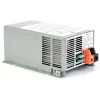
Go Power Industrial Pure Sine Wave Inverter Charger – 3,000 Watts – 100 Amps – 12V
Original price was: 1,900.00$.1,700.00$Current price is: 1,700.00$.
Delivery in 2-3days
30days Return Policy
3Years Warranty
Description
Description
Go Power RV Power Inverter
- 3000 Watts
- Pure Sine Wave Inverter
- 12V
- Inverter/Charger/Transfer Switch Functions
- Go Power
- Power Center
- Industrial Duty – Large Loads
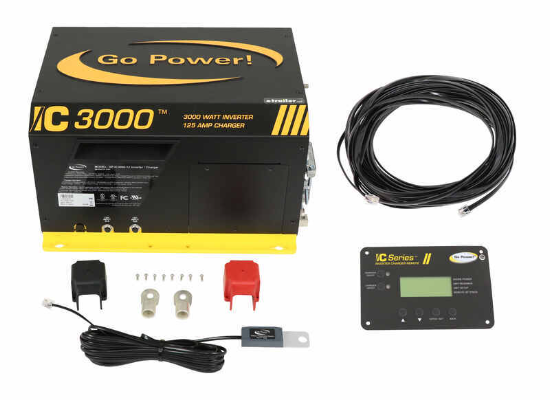
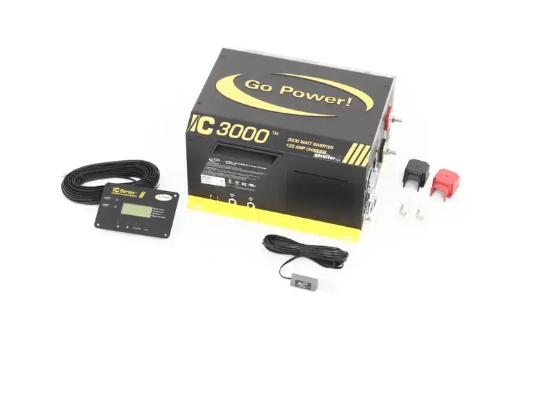
3,000-Watt inverter charger combines a pure sine wave inverter, converter charger, and automatic transfer switch. Saves space and simplifies installation by consolidating 3 vital components into 1 compact unit. Includes fixed-mount remote.
Features:
- 3-in-1 Unit combines a pure sine wave inverter, converter charger, and automatic transfer switch
- Consolidated system saves space and means you only have to install 1 component
- 3,000-Watt inverter changes your battery’s DC output into AC power and sends it to the RV’s electrical system
- Pure sine wave technology replicates household AC power, allowing you to run devices safely
- Converter charger changes AC shore power to DC power to quickly charge your batteries
- Multistage charging helps extend battery life
- Transfer switch automatically changes from inverter to shore power when you hook up at the campground
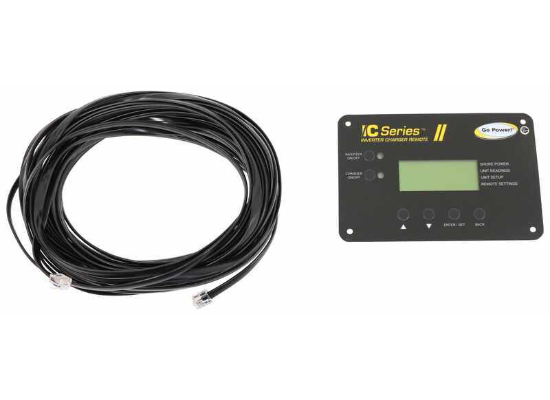
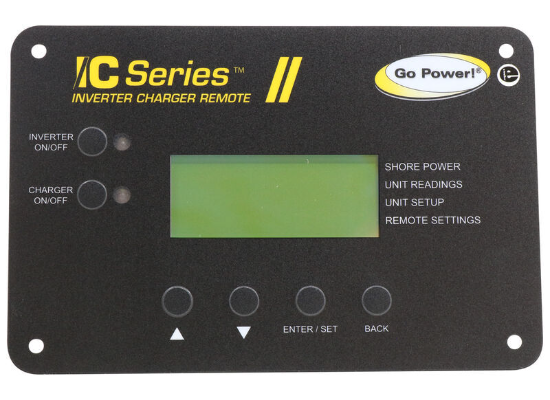
- Included fixed-mount remote lets you monitor and control the inverter charger from inside your RV
- LED indicators show inverter status and fault conditions
- Multiple connection points let you secure cables and external devices to the inverter
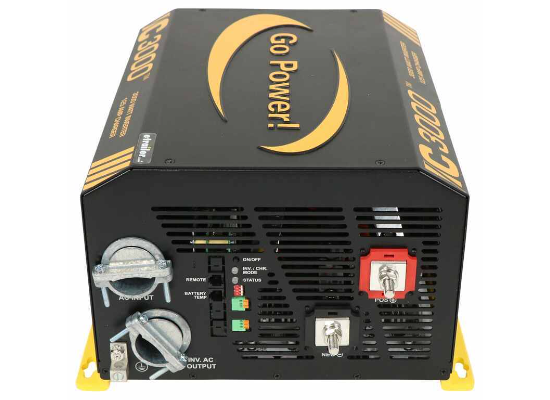
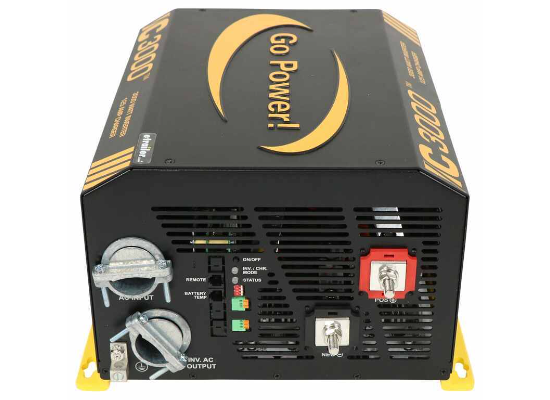
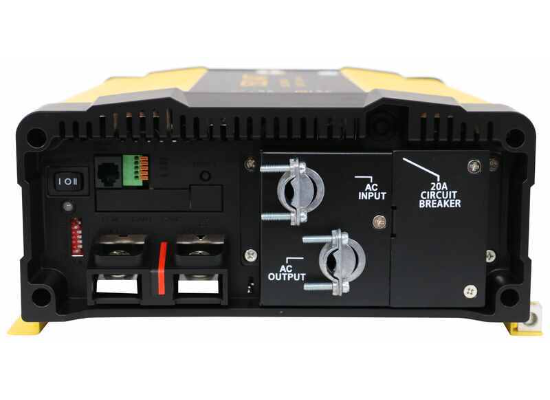
- Includes AC input and output terminals, DC input terminals, remote port, and battery sensor port
- Built-in safety features protect your RV’s electrical system
- Fuse block installation kit (sold separately) lets you safely connect the inverter charger to your RV battery
Specs:
- Application: 12V battery systems
- Inverter rated power:
- Running (rated) power output: 3,000 watts
- Starting (surge) power output: 4,800 watts
- Voltage:
- Inverter input: 9 – 17 VDC
- Inverter output: 115 VAC
- Charger input: 80 – 140 VAC
- Charger output: 5 – 16 VDC
- Amperage:
- Inverter peak output: 52 amps
- Inverter continuous output: 25 amps
- Charger current input: 18 amps
- Charger current output: 125 amps
- Transfer switch power: 100 amps (2 legs at 50 amps each)
- Operating temperature range: -4 F to 140 F
- Remote cable length: 50′
- Battery sensor cable length: 25′
- Dimensions:
- Inverter charger: 15″ long x 11-1/8″ wide x 8″ tall
- Remote:
- Front: 5-7/8″ wide x 3-7/8″ tall
- Rear: 4-11/16″ wide x 2-11/16″ tall x 1-1/4″ deep
- Weight: 49.8 lbs
- 3-Year warranty
Combining an inverter, converter charger, and transfer switch, the Go Power IC Series 3,000-watt inverter charger puts three essential RV functions into one unit. The compact size takes up less space in your RV and simplifies installation. It lets you convert AC shore power into DC power to charge your batteries, inverts your DC battery output into AC power to power electronics and appliances, and automatically transfers to shore power when available.
Pure Sine Wave
Inverter Produces Clean AC Power
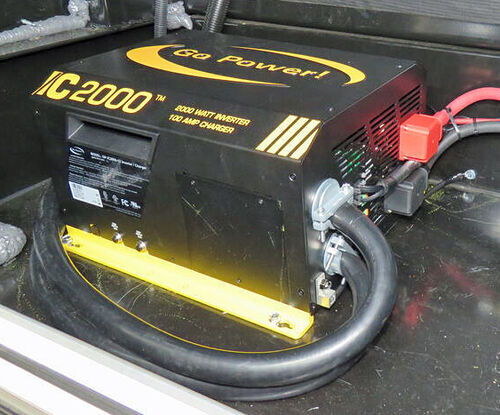
The pure sine wave inverter changes DC output from your RV batteries into AC power and sends it to the electrical system. It creates clean power with low distortion, making it safe, efficient, and perfect for sensitive electronics like computers. Plus, the inverter can generate 4,800 starting watts and 3,000 running watts which is a great fit for larger appliances or multiple devices.
Smart Converter Charger with Automatic Multistage Charging System
The smart converter charger converts AC shore power into DC power to charge your battery bank. If your RV already has a stock converter charger, it will need to be removed to ensure this part of the unit operates properly.
Using a multistage charging system, the converter charger automatically switches voltages while the battery bank charges. This accelerates the charge, but also helps extend battery life by adjusting the voltage during the different modes. It is compatible with sealed/gel, AGM, flooded/wet cell, and lithium batteries. And with the included fixed-mount remote, you can select charging profiles for the different battery types.
Charging Modes
- Bulk: This mode charges at the full rated load for a quicker recharge time. As the name suggests, this is where the bulk of the charging happens. It typically charges the battery to at least 80% capacity.
- Absorption: This mode provides controlled voltage to ensure a full charge. Once the battery reaches between 80% to 90% capacity, the absorption state will kick in and start charging at a regulated voltage. This mode is set to last for 2 hours after the bulk charge is completed.
- Float: Once the battery reaches full charge, this mode maintains a lower voltage to compensate for self-discharge. This reduces battery stress and minimizes gassing and water loss.
- Equalization: On flooded batteries, this mode (which is only accessible with the included fixed-mount remote) activates to prevent stratification and sulfate buildup during extended float cycles. These two issues can damage a battery by causing the accumulation of acid at the bottom of the battery and hardened sulfate crystals on the battery plates. This mode is especially helpful when your battery is going unused during storage.
Automatically Switches to Shore Power
The integrated transfer switch selects the primary source of AC current. The switch inside of this inverter charger has been pre-wired to automatically change from inverter to shore power to conserve battery life. This switch includes (2) 50-amp legs, which allows you to use up to 100 amps by passing through 12,000 watts on a shore power service. The legs are rated at 120V each, but they can be used as a 240V split-phase or 240V dual input if needed. This would be useful if your RV has larger appliances, such as a clothes dryer or oven range. However, if you plan on using an on-board generator and shore power, you still need an external transfer switch to link power to the inverter charger. If you are just utilizing shore power, you only need this unit since you are switching between two sources.
To prevent electrical interruptions, the time delay circuit board allows the alternate power source to stabilize before a transfer occurs. Additionally, since the switch only accepts one active source, it protects your electrical system from dangerous backfeed that can damage your equipment.
Fixed-Mount Remote

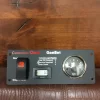
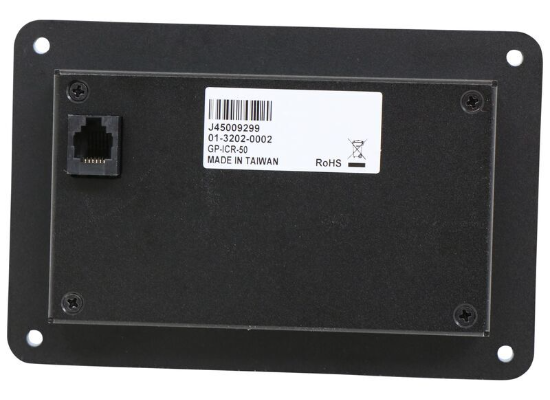
The included fixed-mount remote lets you monitor and control the inverter charger from inside your RV. It includes a digital display that shows the voltage, output power, status, temperature, and charging activity. You can also customize settings like your battery profile, charge rate, and more. And it has a power button that lets you turn the inverter charger on and off.
Connections and Status Lights

The inverter charger includes AC input and output terminals that connect to your AC panel and shore power input. It has DC input terminals which connect to your batteries. Additionally, it has ports for the fixed-mount remote and battery sensor. It also has 2 LEDs that show fault conditions and operation mode. Lastly, it has a power switch that controls the inverter charger.
Safety Features
The system includes a number of safety features. It offers protection from over/under voltage and overloading. The inverter also uses a heat sink process to protect from extreme temperatures, and an internal cooling fan removes excess heat from the unit.
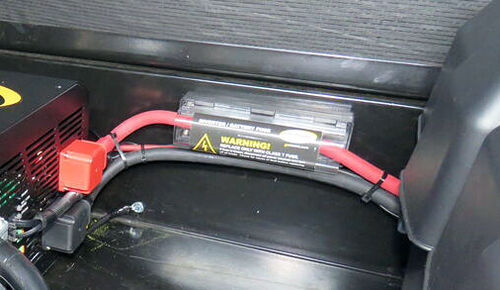
For additional safety, installing a fuse between the battery bank and the inverter charger will protect your equipment from power surges. The Go Power 400-amp fuse block (sold separately) works with this unit and uses a slow blow time-delay feature to withstand surge current. This means it can handle short surges over 400 amps without blowing the fuse, which is great for devices with motors that require more energy to start.
Battery Temperature Sensor Adds Additional Battery Protection

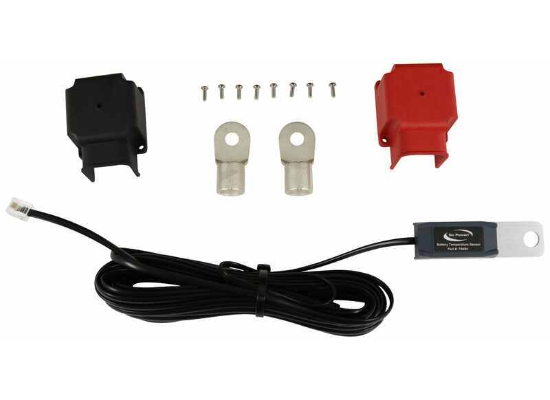
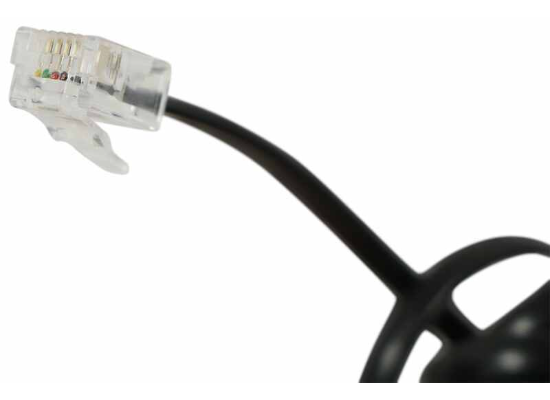
The battery temperature sensor protects the battery bank from large temperature fluctuations. As the inverter charger experiences changes in temperature, the sensor compensates for those changes by adjusting the voltage during charging to help extend the life of your batteries. This protects from overcharging in hot temperatures and undercharging in cold temperatures. The voltage adjustments also ensure that you are getting the most from your charge.
How It Installs
The inverter charger mounts inside your RV in a dry location with ventilation. It should be installed in close proximity to the battery bank, but not in the same compartment. The DC terminals are wired to the battery bank. There are several ways to connect the inverter section to your RV’s electrical system, but this will depend on your rig and how you want to use your inverter. Also, the temperature sensor installs to the negative battery terminal and plugs in the battery temperature port on the inverter charger.