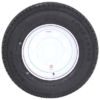
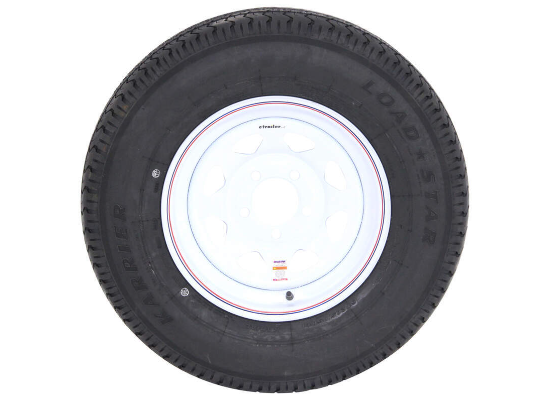
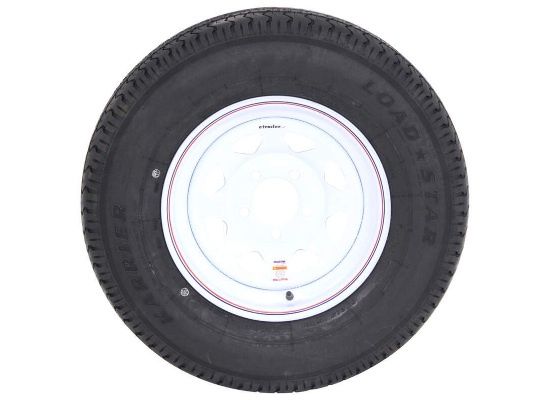
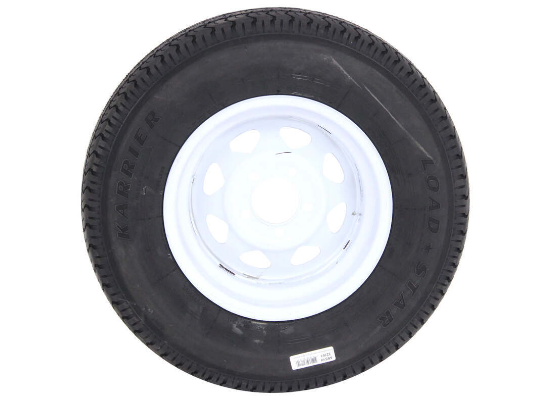
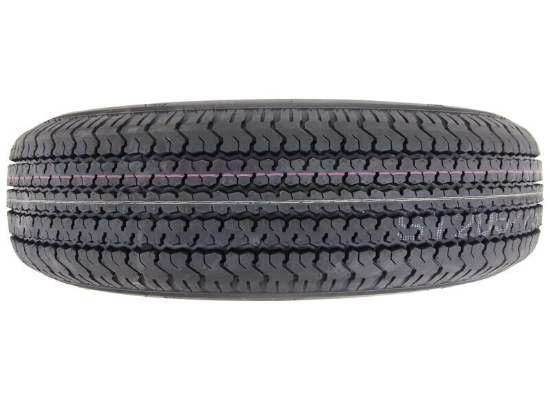
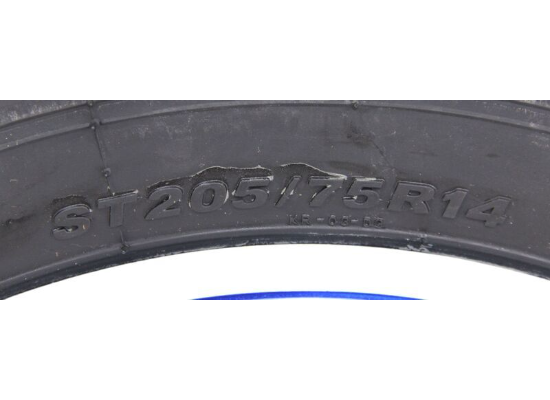
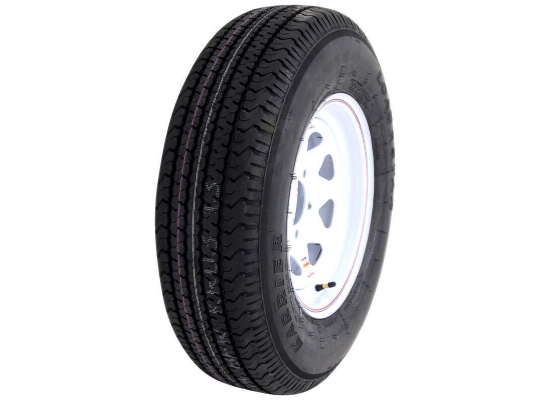
Karrier ST205/75R14 Radial Trailer Tire w/ 14″ White Spoke Wheel – 5 on 4-1/2 – Load Range D
Original price was: 193.00$.170.00$Current price is: 170.00$.
Delivery in 2-3days
30days Return Policy
3Years Warranty
Description
Description
Kenda Trailer Tires and Wheels – AM32161
- 14 Inch
- Tire with Wheel
- 5 on 4-1/2 Inch
- 205/75-14
- Load Range D
- Steel Wheels – Powder Coat
- Radial Tire
- M – 81 mph
- Kenda
Radial tire has a ply rating of 8 and a 2,200-lb maximum load. The 14″ diameter x 5-1/2″ wide steel wheel features a 5 on 4-1/2 bolt pattern and a corrosion-resistant powder coat finish.
Features:
- Kenda Karrier special trailer radial tire
- Special trailer tire design
- Couples the strength of a bias tire with the durability and stability of a radial tire
- Created specifically for trailers – not intended for use on other vehicles
- Double steel belts and full nylon plies combine for superior function and long life
- Computer-generated tread design and premium rubber-compound materials
- Superior traction in wet or dry conditions
- Special trailer tire design
- 8-Spoke steel wheel by Dexstar
- Resists rust with white powder coat finish over e-coat primer
- Tire-and-wheel assembly meets DOT specifications
Specs:
- Rim dimensions: 14″ diameter x 5-1/2″ wide
- Bolt pattern: 5 on 4-1/2″
- Wheel bolt size: 1/2″-20
- Offset: 0
- Pilot diameter: 3.19″
- Wheel capacity: 2,200 lbs
- Tire size: ST205/75R14
- Section width: 8.1″
- Outer diameter: 26.3″
- Tire capacity:
- Load range: D
- Ply rating: 8
- Maximum load: 2,200 lbs at 75 psi
- Maximum speed: 81 mph (speed rating M)
- Warranty:
- 5-Year on tire
- Limited 1-year on wheel
1-Year Worry-Free Guarantee
This tire has a 1-year worry-free guarantee. If within the first 12 months the tire is damaged in any way, it will be replaced at no charge.
Radial Tires vs. Bias Tires

Radial ply tires are designed for trailers that are towed on the highway. The cords on a radial tire are positioned at a 90-degree angle to the direction of travel so that they lay across the width of the tire from wheel lip to wheel lip. This construction prevents the cords from rubbing against one another when the tire flexes, unlike the cords on a bias ply tire. As a result, radial tires have less rolling resistance and heat buildup, which leads to a longer tread life and improved steering at higher speeds.
Determining the Bolt Pattern
The first number in the bolt pattern is the number of bolt holes. The second number denotes the diameter, in inches, of the circle on which the bolt holes sit.
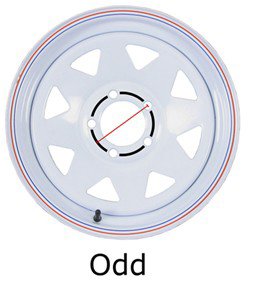
To determine the bolt-circle diameter on wheels with an odd number of bolt holes, measure from the center of any bolt hole to the point halfway between the two bolt holes directly across from the first. (Example: “5 on 4-1/2″ means 5 bolt holes with 4-1/2” measured to a point halfway between the opposite bolt holes.)
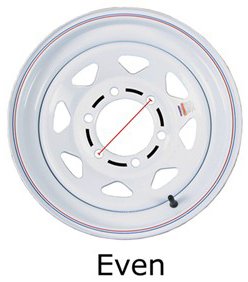
On wheels with an even number of bolt holes, measure from the center of one bolt hole to the center of the hole directly across from it. (Example: “8 on 6-1/2″ means 8 bolt holes with 6-1/2” from the center of one hole to the center of another on the opposite side.)
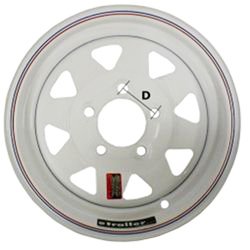
Measuring the distance from the center of one bolt hole on the wheel to the center of a bolt hole right next to it can also help to determine the bolt pattern.
- If D = 2-5/8″, then the bolt pattern is 5 on 4-1/2″
- If D = 2-3/4″, then the bolt pattern is 5 on 4-3/4″
- If D = 3″, then the bolt pattern is 5 on 5″
- If D = 3-1/4″, then the bolt pattern is 5 on 5-1/2″