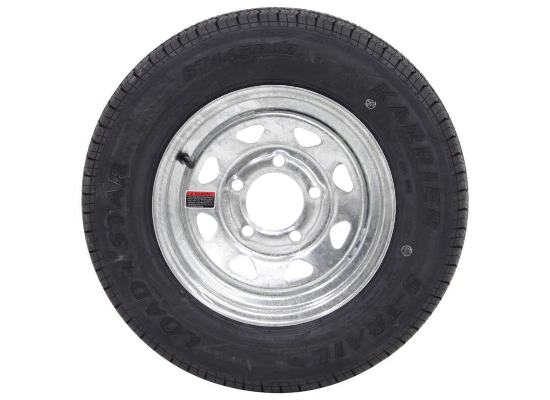
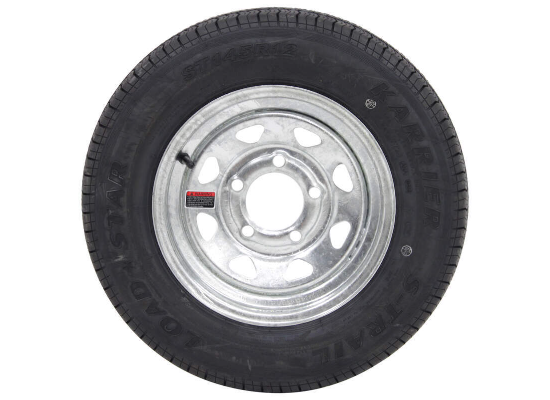
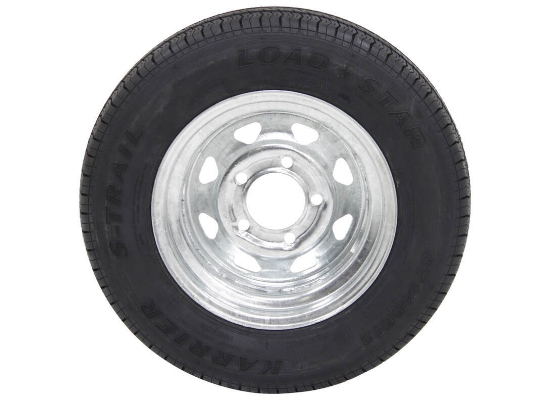
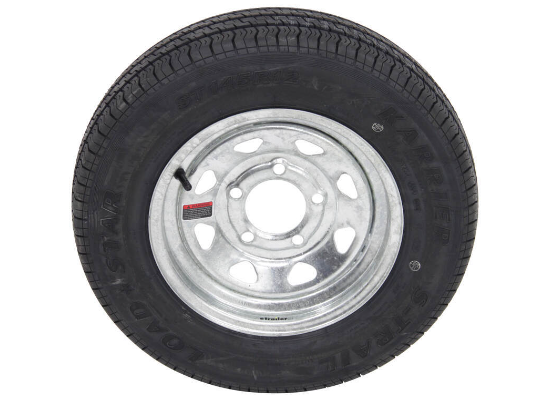
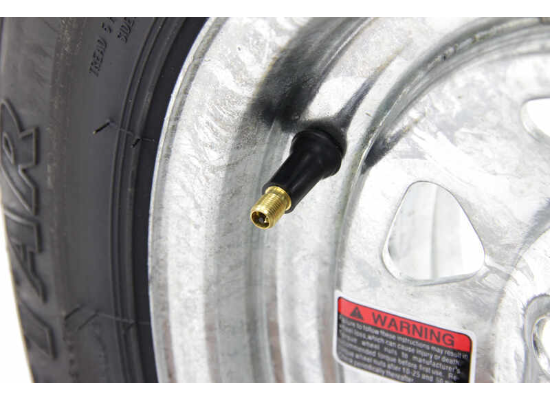
Kenda Karrier S-Trail ST145/R12 Radial Tire w/ 12″ Galvanized Spoke Wheel – 5 on 4-1/2 – LR D
Original price was: 150.00$.100.00$Current price is: 100.00$.
Delivery in 2-3days
30days Return Policy
3Years Warranty
Description
Description
Kenda Trailer Tires and Wheels – AM31202
- 12 Inch
- Tire with Wheel
- 5 on 4-1/2 Inch
- 145/80-12
- Load Range D
- Steel Wheels – Galvanized
- Boat Trailer Wheels
- Radial Tire
- M – 81 mph
- Kenda
Radial tire with automotive-grade tread has an 8-ply rating and a 1,220-lb max load at 65 psi. 12″ x 4″ Steel wheel has a 5 on 4-1/2 bolt pattern and a corrosion-resistant galvanized finish. Beveled stud holes keep wheel secure.
Features:
- Tire-and-wheel assembly is ideal for boat trailers, stock trailers, utility trailers, and campers
- Sturdy steel wheel with 8-spoke design
- Galvanized finish provides superior protection from rust and corrosion
- Beveled stud holes help to keep wheel securely in place on trailer hub
- Eliminate the need for constant retightening of lug nuts
- Karrier S-Trail radial tire
- Double steel belts and full nylon plies combine for superior function and long life
- Premium rubber compound materials help disperse heat
- Radial ply tire is great for highway use
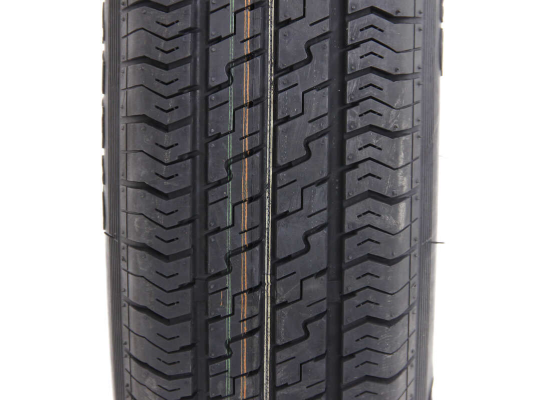
- Automotive-grade, computer-generated tread has sipes that channel water away from the tire to improve traction during wet, snowy, or icy conditions
- Special trailer (ST) tire has sturdy sidewalls so that it can handle heavy loads
- Created specifically for trailers and not intended for use on other vehicles
- Assembly meets DOT specifications
Specs:
- Rim dimensions: 12″ diameter x 4″ wide
- Bolt pattern: 5 on 4-1/2″
- Wheel bolt size: 1/2″-20
- Wheel capacity: 1,250 lbs
- Pilot diameter: 3.19″
- Offset: 0
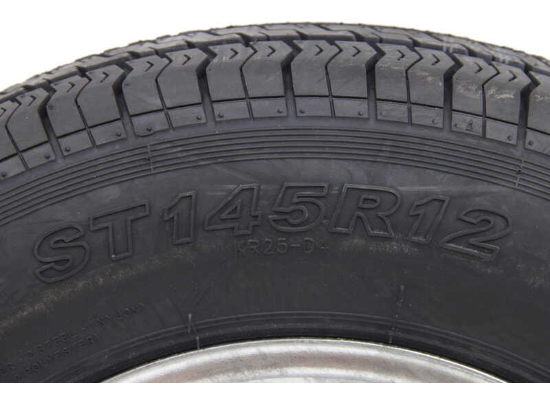
- Tire size: ST145/R12
- Section width: 5.7″
- Outer diameter: 21.3″
- Tire capacity:
- Load range: D
- Ply rating: 8
- Maximum load: 1,220 lbs at 65 psi
- Maximum speed: 81 mph (speed rating M)
- Tread depth: 7/32″
- Warranty:
- 5-Year on tire
- Limited 2-year on wheel
1-Year Worry-Free Guarantee
This tire has a 1-year worry-free guarantee. If within the first 12 months the tire is damaged in any way, it will be replaced at no charge.
Karrier S-Trail Radials with Automotive-Grade Tread

Unlike standard trailer tire tread, which has solid, continuous ribs, the automotive-grade, computer-generated tread on these Karrier S-Trail radials has ribs with breaks. These breaks allow water to run off to the sides. The Karrier S-Trail tread also has sipes. Siping is a process in which thin grooves (or sipes) are cut into the rubber of the tire. The grooves channel water away from the tread so that the tire makes better contact with the road. Both of these features greatly improve traction during wet, snowy, or icy conditions.
Karrier S-Trail radials are constructed with double steel belts and full nylon plies for increased durability and endurance. The premium rubber compound materials of this tire help disperse heat.
Beveled Stud Holes

The stud holes on this steel wheel are beveled to ensure that the wheel stays tight against your trailer hub. This also eliminates the need to constantly retorque the lug nuts.
Radial Tires vs. Bias Tires

Radial ply tires are designed for trailers that are towed on the highway. The cords on a radial tire are positioned at a 90-degree angle to the direction of travel so that they lay across the width of the tire from wheel lip to wheel lip. This construction prevents the cords from rubbing against one another when the tire flexes, unlike the cords on a bias ply tire. As a result, radial tires have less rolling resistance and heat buildup, which leads to a longer tread life and improved steering at higher speeds.
Determining the Bolt Pattern
The first number in the bolt pattern is the number of bolt holes. The second number denotes the diameter, in inches, of the circle on which the bolt holes sit.
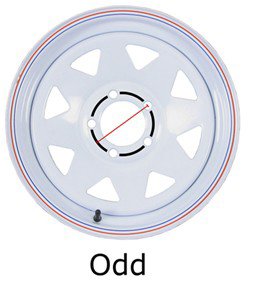
To determine the bolt-circle diameter on wheels with an odd number of bolt holes, measure from the center of any bolt hole to the point halfway between the two bolt holes directly across from the first. (Example: “5 on 4-1/2″ means 5 bolt holes with 4-1/2” measured to a point halfway between the opposite bolt holes.)
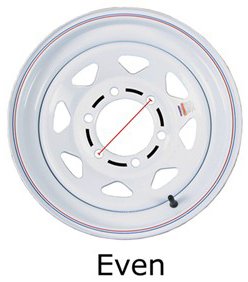
On wheels with an even number of bolt holes, measure from the center of one bolt hole to the center of the hole directly across from it. (Example: “8 on 6-1/2″ means 8 bolt holes with 6-1/2” from the center of one hole to the center of another on the opposite side.)
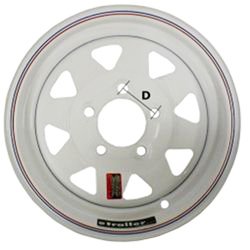
Measuring the distance from the center of one bolt hole on the wheel to the center of a bolt hole right next to it can also help to determine the bolt pattern.
- If D = 2-5/8″, then the bolt pattern is 5 on 4-1/2″
- If D = 2-3/4″, then the bolt pattern is 5 on 4-3/4″
- If D = 3″, then the bolt pattern is 5 on 5″
- If D = 3-1/4″, then the bolt pattern is 5 on 5-1/2″